
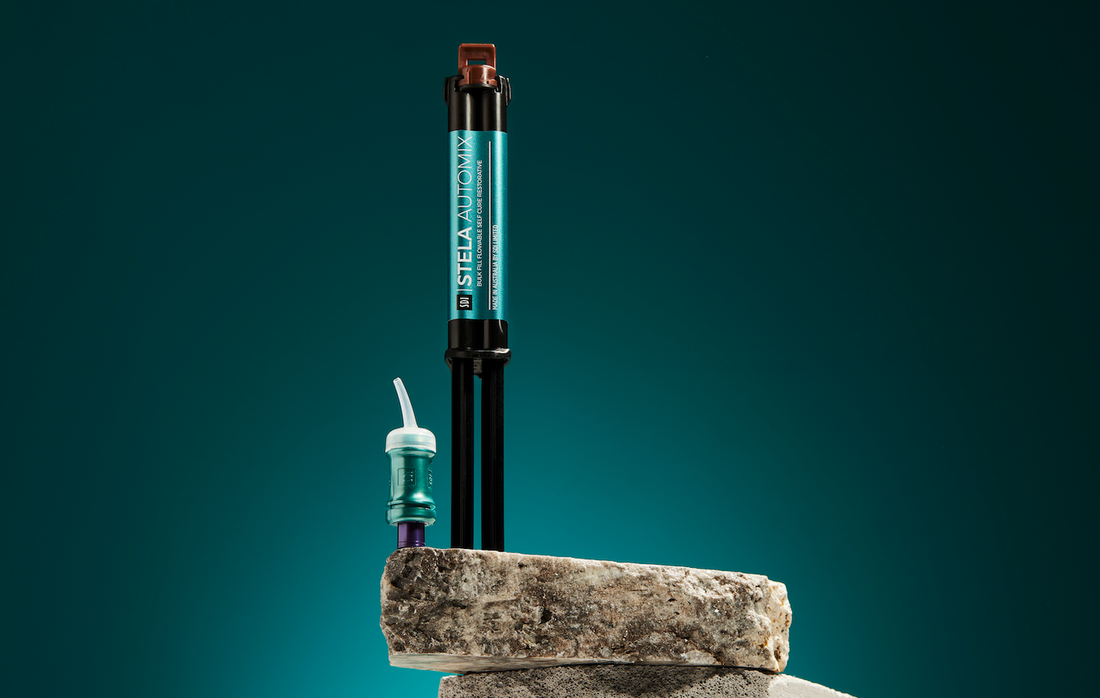
Stela's emergence as a game-changing amalgam alternative encapsulates the Australian company's innovative evolution over the decades
By Danny Chan
Do you recall the birth of the original iPhone? It was an innovation truly groundbreaking in its time. Yet even with its revolutionary status, it had its initial share of bugbears – the lack of copy-and-paste functionality being one of the most prominent. Nonetheless, through persistent efforts and a series of improvements over the years, it gradually transformed into the iconic device we know today
It's important to recognise that exceptional innovations like the iPhone aren't born overnight. History shows that greatness is often a product of relentless improvement, backed by extensive and costly research and development endeavours.
The reason for bringing this up is to draw comparisons with, and attention to, a Victoria-based dental company that has, since 1972, been holding its own as one of the world’s leading innovators of dental restorative materials.
Birth of an amalgam alternative
Whenever you hear industry buzz about SDI Ltd, the news typically emanates from behind their well-worn R&D curtains, unveiling yet another breakthrough solution.
World-famous brands that have sashayed down SDI’s innovation runway include: the Luna and Aura composite ranges; The "Riva" range of glass ionomers; the “Pola” range of tooth whitening materials; the Radii LED curing lights and the SDF brand Riva Star.
Unsurprisingly, Australia’s biggest dental exporter celebrated its 50th anniversary last year doing what it does best: announcing the birth of another Next Big Thing, – this time, in the form of Stela.
“Stela is a self-cure composite that was engineered as an amalgam replacement,” says Samantha Cheetham, SDI’s CEO
“As a leader in restoratives, SDI began an ambitious amalgam alternative project in 2018. SDI mobilised its 50 years of restorative experience and partnered with the universities of Sydney, NSW and Wollongong to develop Stela over an intensive 5-year timeline.”
Through the partnership with the universities, SDI worked on high-performance industrial composites and various other cutting-edge materials, leading to the publication of numerous scientific journals and the presentation of compelling research findings at prestigious conferences.
Addressing the oral health conundrum
As the dental industry worldwide has been seeking more aesthetic, physiologically integrated materials and compliance with global regulations, there's been a gradual decline in amalgam usage. The drawbacks of amalgam, including the need for extensive removal of healthy dental structure and poor aesthetics, have led to a 55% decline in worldwide amalgam use between 2019 and 2022.
It was this challenging landscape that led to the birth of Stela. As an amalgam technology leader with decades of industry experience, SDI took it upon their rugged R&D shoulders to create an amalgam alternative that would address the clinical needs of practitioners and global health regulations.
“Stela combines all the benefits of amalgam (high strength, easy to use, no light curing) and eliminates the drawbacks (Stela is minimally invasive, aesthetic and doesn’t contain mercury), Samantha adds. “Stela is also gap free, to ensure a longer lasting restoration.”
Part of the team
As a dental restorative material, Stela goes beyond the confines of a stand-alone product. It builds upon the strengths and characteristics of SDI's existing product portfolio. This evolutionary approach creates a harmonious synergy that elevates the entire spectrum of dental materials.
“Our Luna composite range provides excellent handling, strength and aesthetics. Our Riva range of glass ionomer cements provides a range of handling options with high fluoride release,” says Emma Kakantonis, the company’s Australian Sales Manager.
“The launch of Stela expands the versatility of composites. Stela has an unlimited depth of cure, without the need for a light cure during preparation or final set. This provides full confidence when restoring difficult or deep angled restorations.”
While traditional composites are limited to between 2-5mm depth of cure, Stela has an unlimited depth of cure. This certainty of cure eliminates guesswork and the risk of premature failure, preventing the widely-acknowledged risk of uncured material underneath a restoration.
“The simplicity of Stela is also perfect for nervous patients who are apprehensive about having a changing set of instruments and tastes placed in their mouth,” Emma concludes.
Stela’s strengths
With a compressive strength of 328 MPa and flexural strength of 143 MPa, Stela is one of the strongest composites available.
“Stela’s combination of high compressive and flexural strength ensures restorations can survive daily mastication forces,” Samantha adds.
“While this strength is essential – it’s also Stela’s gap free interface that ensures the longevity of restorations.”
One common cause for composite failure is microleakage into adjacent gaps, formed from stresses during curing. Stela’s unique, patented system results in a low-stress, gap-free interface, ensuring longer lasting restorations.
According to Leon Prentice, SDI’s Chief R&D Officer, Stela’s unique composition considered the shrinking property that plagues composites.
“All composites shrink a little as they cure – as the chemical bonds polymerise (cross-link), they pull together. The key is a composite’s shrinkage behaviour, and understanding the stresses that remain when everything is in its final set state,” he explains.
“For Stela, SDI engineered the system so that the Stela Primer accelerates curing towards the marginal walls – very different from light-curing, where the light cure polymerisation creates micro gaps as the restoration is pulled towards the light source. This innovation provides a restoration with no gaps, which reduces post-operative sensitivity.”
Two-step process – no curing light necessary
Stela is designed for easy placement. Unlike traditional composite systems, which involve up to 7 preparation steps, a Stela restoration requires only two steps: first applying the custom Stela Primer, followed by placing the Stela restorative. This streamlined approach minimises the risk of cross-contamination, reduces the need for patient intervention, and enhances efficiency.
“SDI also added technology into the bonding, engineering an optimal two-step restorative to deliver both optimal cavity preparation and optimal restoration,” Leon says.
“Stela Primer and the Stela Restorative both contain methacrylate monomers and MDP. These cure together, bonding to the cavity walls, delivering both superior bond strength and an outstanding seal, with minimal residual stresses.”
As Stela requires no curing light during preparation or for final set, its universal shade is designed for a “chameleon effect”.
“A bulk fill composite that needs to be light cured generally has to be unnaturally translucent to allow the light to get as deep as possible,” Leon adds.
“Stela has no such limitation. It does not require a curing light to cure all the way through, therefore its shade can more accurately mimic teeth. Stela is available in a universal shade with chameleon effect that blends in with surrounding structures, blocking stains like a dentine replacement and sealing edges for a flawless finish that mimics enamel.”
Stela’s ingenuity further shines through its versatility – it’s meticulously crafted for application in both capsules and syringes. This thoughtful design ensures that whether you're equipped with a triturator/amalgamator or not, Stela seamlessly integrates into your practice.
Ears to the ground
SDI’s commitment to dental innovation is evident in the journey that led to Stela's creation. From the collaborative effort with leading Australian universities to its breakthrough attributes – high flexural strength, two-step process, no light curing, minimally invasive, no mercury, gap-free – Stela is aptly positioned as the "true amalgam alternative”.
As SDI celebrates its 50th anniversary, Stela stands as a testament to the company's evolution from an Australian brand with a single product to a global brand offering a comprehensive range of restoratives and tooth-whitening solutions.
Meanwhile, SDI Ltd is capping off the year with another accolade – being named by Dental Advisor (USA) as the “2023 innovative company of the year”. Proud of their achievements, Samantha Cheetham articulates SDI’s long-standing perspective behind their innovative agenda.
“SDI achieves its success by listening to dentists and striving to help them deliver better patient outcomes,” she says.
“And in the future, that will be no different. SDI will continue to engineer improved restoration and whitening products that are faster, easier and longer lasting.”
By Danny Chan
Do you recall the birth of the original iPhone? It was an innovation truly groundbreaking in its time. Yet even with its revolutionary status, it had its initial share of bugbears – the lack of copy-and-paste functionality being one of the most prominent. Nonetheless, through persistent efforts and a series of improvements over the years, it gradually transformed into the iconic device we know today
It's important to recognise that exceptional innovations like the iPhone aren't born overnight. History shows that greatness is often a product of relentless improvement, backed by extensive and costly research and development endeavours.
The reason for bringing this up is to draw comparisons with, and attention to, a Victoria-based dental company that has, since 1972, been holding its own as one of the world’s leading innovators of dental restorative materials.
Birth of an amalgam alternative
Whenever you hear industry buzz about SDI Ltd, the news typically emanates from behind their well-worn R&D curtains, unveiling yet another breakthrough solution.
World-famous brands that have sashayed down SDI’s innovation runway include: the Luna and Aura composite ranges; The "Riva" range of glass ionomers; the “Pola” range of tooth whitening materials; the Radii LED curing lights and the SDF brand Riva Star.
Unsurprisingly, Australia’s biggest dental exporter celebrated its 50th anniversary last year doing what it does best: announcing the birth of another Next Big Thing, – this time, in the form of Stela.
“Stela is a self-cure composite that was engineered as an amalgam replacement,” says Samantha Cheetham, SDI’s CEO
“As a leader in restoratives, SDI began an ambitious amalgam alternative project in 2018. SDI mobilised its 50 years of restorative experience and partnered with the universities of Sydney, NSW and Wollongong to develop Stela over an intensive 5-year timeline.”
Through the partnership with the universities, SDI worked on high-performance industrial composites and various other cutting-edge materials, leading to the publication of numerous scientific journals and the presentation of compelling research findings at prestigious conferences.
Addressing the oral health conundrum
As the dental industry worldwide has been seeking more aesthetic, physiologically integrated materials and compliance with global regulations, there's been a gradual decline in amalgam usage. The drawbacks of amalgam, including the need for extensive removal of healthy dental structure and poor aesthetics, have led to a 55% decline in worldwide amalgam use between 2019 and 2022.
It was this challenging landscape that led to the birth of Stela. As an amalgam technology leader with decades of industry experience, SDI took it upon their rugged R&D shoulders to create an amalgam alternative that would address the clinical needs of practitioners and global health regulations.
“Stela combines all the benefits of amalgam (high strength, easy to use, no light curing) and eliminates the drawbacks (Stela is minimally invasive, aesthetic and doesn’t contain mercury), Samantha adds. “Stela is also gap free, to ensure a longer lasting restoration.”
Part of the team
As a dental restorative material, Stela goes beyond the confines of a stand-alone product. It builds upon the strengths and characteristics of SDI's existing product portfolio. This evolutionary approach creates a harmonious synergy that elevates the entire spectrum of dental materials.
“Our Luna composite range provides excellent handling, strength and aesthetics. Our Riva range of glass ionomer cements provides a range of handling options with high fluoride release,” says Emma Kakantonis, the company’s Australian Sales Manager.
“The launch of Stela expands the versatility of composites. Stela has an unlimited depth of cure, without the need for a light cure during preparation or final set. This provides full confidence when restoring difficult or deep angled restorations.”
While traditional composites are limited to between 2-5mm depth of cure, Stela has an unlimited depth of cure. This certainty of cure eliminates guesswork and the risk of premature failure, preventing the widely-acknowledged risk of uncured material underneath a restoration.
“The simplicity of Stela is also perfect for nervous patients who are apprehensive about having a changing set of instruments and tastes placed in their mouth,” Emma concludes.
Stela’s strengths
With a compressive strength of 328 MPa and flexural strength of 143 MPa, Stela is one of the strongest composites available.
“Stela’s combination of high compressive and flexural strength ensures restorations can survive daily mastication forces,” Samantha adds.
“While this strength is essential – it’s also Stela’s gap free interface that ensures the longevity of restorations.”
One common cause for composite failure is microleakage into adjacent gaps, formed from stresses during curing. Stela’s unique, patented system results in a low-stress, gap-free interface, ensuring longer lasting restorations.
According to Leon Prentice, SDI’s Chief R&D Officer, Stela’s unique composition considered the shrinking property that plagues composites.
“All composites shrink a little as they cure – as the chemical bonds polymerise (cross-link), they pull together. The key is a composite’s shrinkage behaviour, and understanding the stresses that remain when everything is in its final set state,” he explains.
“For Stela, SDI engineered the system so that the Stela Primer accelerates curing towards the marginal walls – very different from light-curing, where the light cure polymerisation creates micro gaps as the restoration is pulled towards the light source. This innovation provides a restoration with no gaps, which reduces post-operative sensitivity.”
Two-step process – no curing light necessary
Stela is designed for easy placement. Unlike traditional composite systems, which involve up to 7 preparation steps, a Stela restoration requires only two steps: first applying the custom Stela Primer, followed by placing the Stela restorative. This streamlined approach minimises the risk of cross-contamination, reduces the need for patient intervention, and enhances efficiency.
“SDI also added technology into the bonding, engineering an optimal two-step restorative to deliver both optimal cavity preparation and optimal restoration,” Leon says.
“Stela Primer and the Stela Restorative both contain methacrylate monomers and MDP. These cure together, bonding to the cavity walls, delivering both superior bond strength and an outstanding seal, with minimal residual stresses.”
As Stela requires no curing light during preparation or for final set, its universal shade is designed for a “chameleon effect”.
“A bulk fill composite that needs to be light cured generally has to be unnaturally translucent to allow the light to get as deep as possible,” Leon adds.
“Stela has no such limitation. It does not require a curing light to cure all the way through, therefore its shade can more accurately mimic teeth. Stela is available in a universal shade with chameleon effect that blends in with surrounding structures, blocking stains like a dentine replacement and sealing edges for a flawless finish that mimics enamel.”
Stela’s ingenuity further shines through its versatility – it’s meticulously crafted for application in both capsules and syringes. This thoughtful design ensures that whether you're equipped with a triturator/amalgamator or not, Stela seamlessly integrates into your practice.
Ears to the ground
SDI’s commitment to dental innovation is evident in the journey that led to Stela's creation. From the collaborative effort with leading Australian universities to its breakthrough attributes – high flexural strength, two-step process, no light curing, minimally invasive, no mercury, gap-free – Stela is aptly positioned as the "true amalgam alternative”.
As SDI celebrates its 50th anniversary, Stela stands as a testament to the company's evolution from an Australian brand with a single product to a global brand offering a comprehensive range of restoratives and tooth-whitening solutions.
Meanwhile, SDI Ltd is capping off the year with another accolade – being named by Dental Advisor (USA) as the “2023 innovative company of the year”. Proud of their achievements, Samantha Cheetham articulates SDI’s long-standing perspective behind their innovative agenda.
“SDI achieves its success by listening to dentists and striving to help them deliver better patient outcomes,” she says.
“And in the future, that will be no different. SDI will continue to engineer improved restoration and whitening products that are faster, easier and longer lasting.”

 RSS Feed
